
A Complete Guide: How to Use Your SEAPENG Tire Pressure Gauge
A Complete Guide: How to Use Your SEAPENG Tire Pressure Gauge
October 24, 2026
Tire pressure affects almost every part of the driving experience. It influences steering response, braking, ride comfort, tire wear, fuel consumption, and the ability of a tire to carry the vehicle’s load safely.
Unfortunately, tire pressure is often checked only when a warning light appears or a tire looks visibly low. By that point, the tire may already have been operating below its recommended pressure. Regular checks with a reliable gauge can help drivers identify pressure changes before they become larger problems.
This guide explains how to find the correct pressure, how different road conditions affect tire-pressure decisions, why inflation matters for fuel economy, and how to use a SEAPENG tire pressure gauge correctly.
What Is Tire Pressure?
Tire pressure is the amount of air inside a tire. It is commonly measured in pounds per square inch, or PSI. Some gauges and vehicle manuals also display pressure in bar, kPa, or kg/cm².
The air inside the tire supports the vehicle’s weight and helps the tire maintain its intended shape. When pressure is too low or too high, the tire’s contact with the road changes.
What Happens When Tire Pressure Is Too Low?
- The tire flexes more and produces additional heat.
- Rolling resistance increases.
- Steering may feel slower or heavier.
- The outer shoulders of the tread may wear faster.
- Braking and handling performance may be reduced.
- The risk of tire damage can increase during extended driving.
What Happens When Tire Pressure Is Too High?
- The ride may feel harder and less comfortable.
- The center of the tread may wear faster.
- The tire may have less ability to absorb bumps and impacts.
- Road grip may be reduced under certain conditions.
- The tire may be more vulnerable to pothole impact damage.
How to Find the Correct Tire Pressure
The correct pressure for your vehicle is normally printed on the tire-information placard. This label is commonly located:
- Inside the driver’s door frame
- On the driver’s door pillar
- Inside the fuel-filler door
- Inside the glove compartment
- In the vehicle owner’s manual
Front and rear tires may require different pressures. Some vehicles also provide separate recommendations for normal driving and carrying a full load.
Why Tire Pressure Should Be Checked When Cold
Vehicle manufacturers normally specify cold tire pressure. A tire is generally considered cold when the vehicle has been parked for several hours or has been driven only a short distance at low speed.
As a vehicle is driven, the tires flex and generate heat. The air inside expands, causing the displayed pressure to rise. This is normal and does not necessarily mean the tire is overinflated.
Do not release air from a warm tire simply because its pressure is higher than the cold recommendation. After the tire cools, it may become underinflated.
Tire Pressure for Different Road Conditions
The vehicle manufacturer’s cold-pressure recommendation should remain the starting point for normal paved-road driving. Different road and load conditions may require additional attention, but pressure should not be changed randomly.
| Driving Condition | Pressure Guidance | What to Remember |
|---|---|---|
| Daily city driving | Use the manufacturer’s recommended cold pressure. | Check regularly because short trips may not reveal a slow leak. |
| Highway driving | Begin with the recommended cold pressure. | Do not reduce pressure because it rises after highway driving. |
| Rain and wet roads | Maintain the recommended pressure. | Correct pressure helps the tread maintain its intended shape and water-channeling ability. |
| Snow and ice | Follow the vehicle placard unless the manufacturer specifies otherwise. | Do not automatically lower pressure for winter grip. |
| Gravel or rough roads | Use the standard recommendation for ordinary road travel. | Drive more slowly and inspect tires after severe impacts. |
| Heavy loads or towing | Follow the loaded-pressure recommendation in the manual or placard. | Never exceed tire, axle, or vehicle load limits. |
| Sand, mud, or technical off-road terrain | Experienced drivers may temporarily reduce pressure within safe tire and vehicle limits. | Drive slowly and reinflate before returning to normal roads. |
How Tire Pressure Affects Fuel Economy
Underinflated tires create more rolling resistance. This means the engine must use additional energy to keep the vehicle moving, potentially increasing fuel consumption.
Correctly inflated tires roll more efficiently and can help the vehicle operate closer to its intended fuel economy. The actual difference depends on factors such as the amount of underinflation, tire design, vehicle type, speed, load, traffic, and driving style.
Other Benefits of Correct Tire Pressure
Highway speeds generate more tire heat. Begin the journey with the correct cold pressure and allow the pressure to rise naturally as the tires warm up. Avoid bleeding air from hot tires.
- More predictable steering and braking response
- More even tread wear
- Potentially longer tire service life
- Reduced tire heat buildup
- Improved ride consistency
- Lower risk of driving on a severely underinflated tire
Overinflating tires above the recommended pressure is not an appropriate way to save fuel. Any small reduction in rolling resistance may come with reduced ride comfort, uneven tread wear, and changes in handling.
How to Use a SEAPENG Tire Pressure Gauge
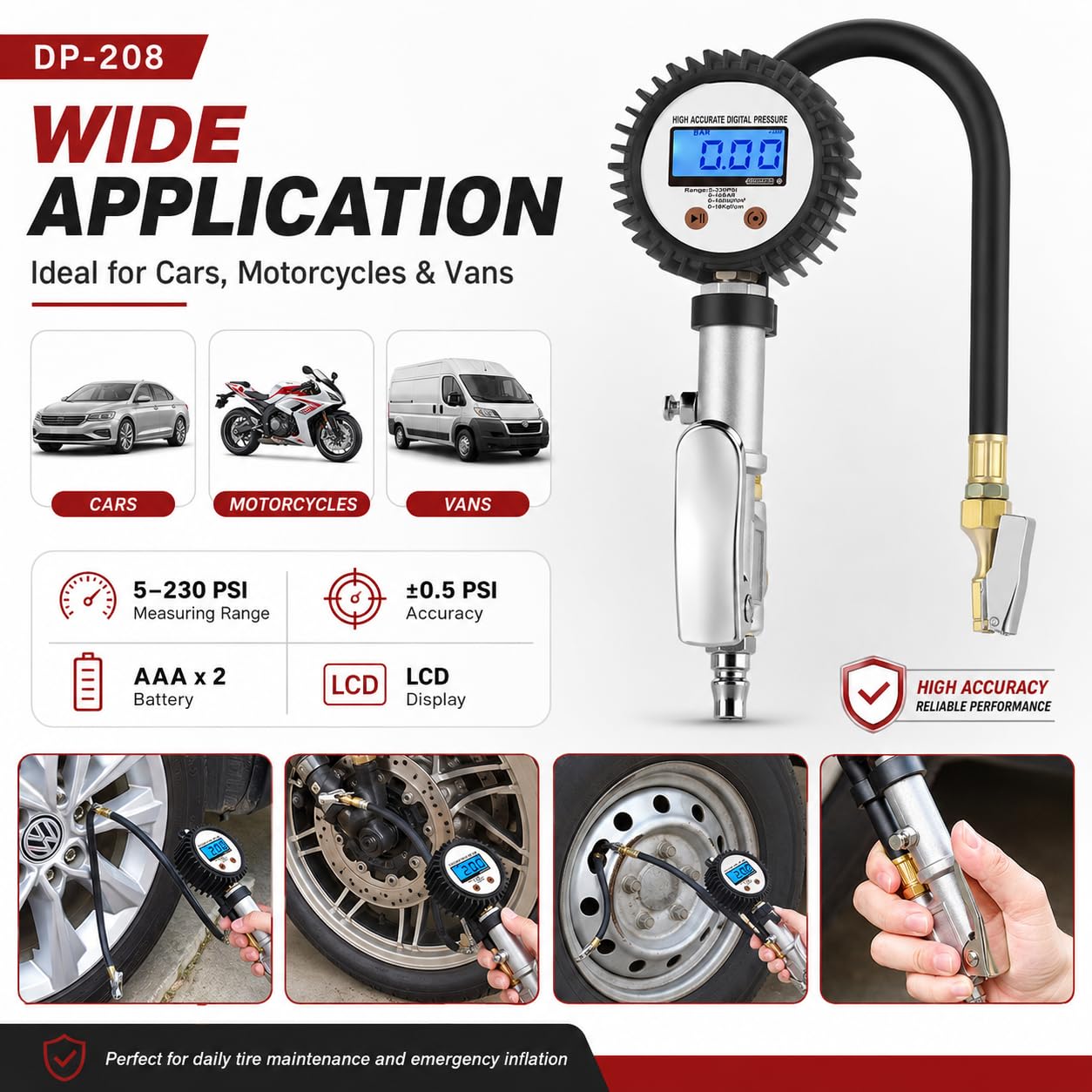
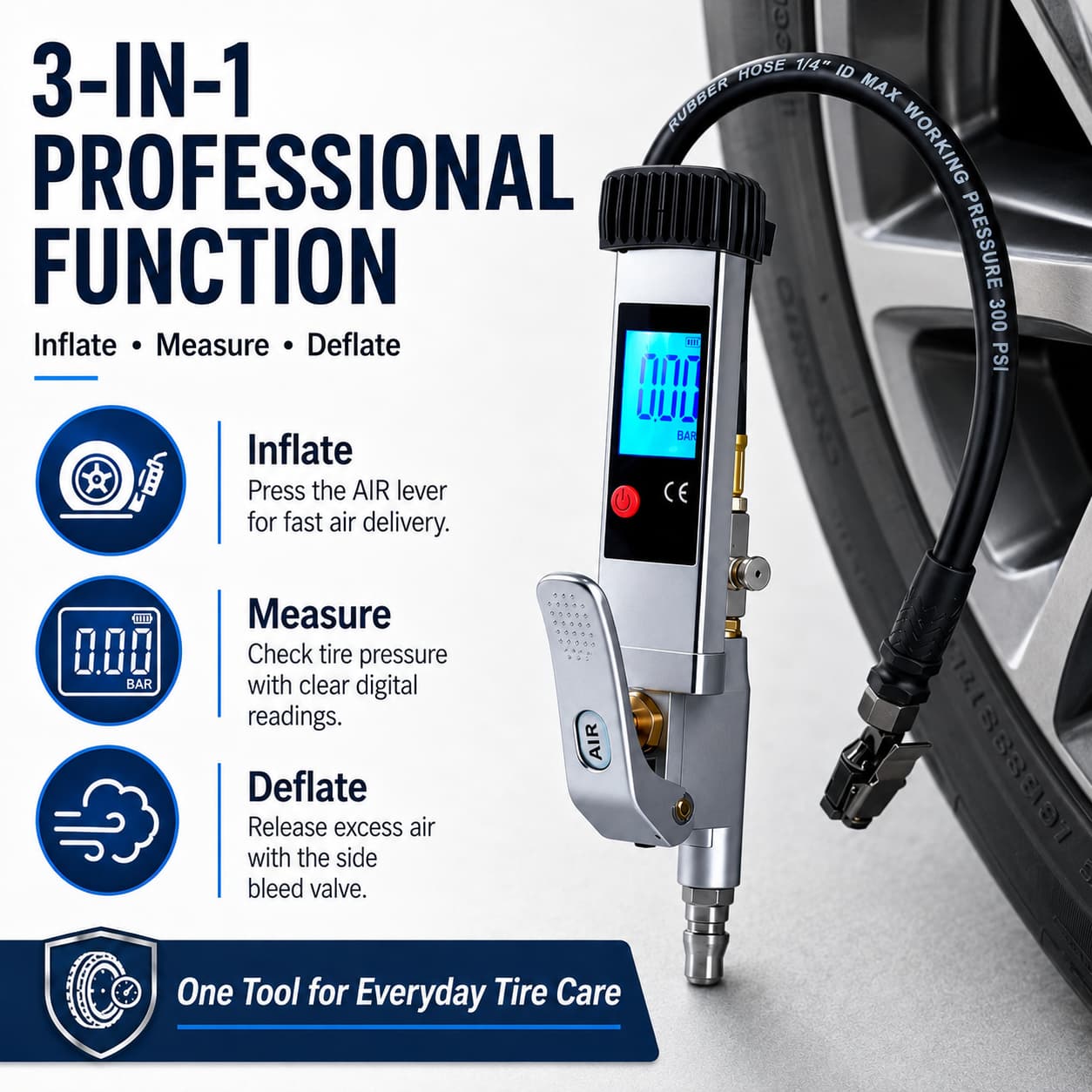
A SEAPENG tire pressure gauge provides a quick and convenient way to check tire pressure. The following instructions apply to most digital and mechanical models. Refer to the product manual if your gauge has additional functions.
-
Park the vehicle and check the recommended pressure.
Park on a safe, level surface and allow the tires to cool. Find the recommended cold pressure on the driver’s door placard or in the vehicle owner’s manual. -
Prepare the SEAPENG gauge.
If you have a digital model, turn it on and select PSI, bar, kPa, or another required unit. Mechanical gauges normally do not require power. -
Remove the tire valve cap.
Unscrew the valve cap and keep it in a safe place so it does not become lost. -
Connect the hose from the pressure gauge to the tire valve stem.
Align the nozzle straight with the valve and press firmly until a complete seal is formed. A brief hiss is normal, but continuous hissing means the gauge should be repositioned. -
Read and compare the pressure.
Hold the gauge steady until the reading stabilizes, then compare it with the vehicle manufacturer’s recommended cold pressure. -
Adjust and recheck the tire.
Add air if the pressure is low. If a cold tire is overinflated, release a small amount of air. Measure again after every adjustment. -
Replace the cap and check the other tires.
Reinstall the valve cap, repeat the process on every tire, and store the SEAPENG gauge in a clean, dry place.
Final Thoughts
Correct tire pressure is one of the simplest forms of preventive vehicle maintenance. It supports safe handling, consistent braking, even tire wear, ride comfort, and efficient fuel use.
For normal road driving, always begin with the cold pressure recommended by the vehicle manufacturer. Adjustments for heavy loads, towing, or specialized off-road driving should be based on official vehicle and tire guidance rather than guesswork.
Keeping a SEAPENG tire pressure gauge in your vehicle gives you a convenient way to check pressure at home, before a road trip, or whenever a tire appears low.
Frequently Asked Questions
1. Should I use the pressure printed on the tire sidewall?
Normally, no. The sidewall usually shows a maximum tire specification rather than the recommended operating pressure for your vehicle. Use the cold pressure listed on the vehicle placard or in the owner’s manual.
2. Should I lower tire pressure when driving in rain or snow?
Do not automatically reduce pressure for wet, snowy, or icy roads. Use the vehicle manufacturer’s recommended cold pressure unless the manufacturer provides different instructions. Appropriate tires, sufficient tread, and lower driving speeds are more important for poor-weather grip.
3. Why is my tire pressure higher after driving?
Driving generates heat, causing the air inside the tire to expand. This produces a normal increase in pressure. Do not release air from a warm tire simply to match the cold-pressure specification.
4. Can proper tire pressure improve fuel economy?
Yes. Correct inflation helps reduce unnecessary rolling resistance, allowing the vehicle to operate more efficiently. The actual fuel-saving benefit depends on the vehicle, tires, driving conditions, and how underinflated the tires were.
5. Why does air escape when I use my SEAPENG tire pressure gauge?
A short hiss during connection is normal. Continuous air leakage usually means the nozzle is not aligned correctly with the valve stem. Remove the gauge, position it straight over the valve, and press firmly until a complete seal is formed.
Ready to get your SEAPENG tire pressure gauges?
Explore the SEAPENG Handheld Tire Pressure Gauge to review its specifications and determine whether it fits your tire maintenance needs.
Learn More About the SEAPENG Tire Inflator GaugesMore SEAPENG Tire Inflator Gauges
SEAPENG DP-002 Digital Tire Inflator Gauge, 5-230 PSI
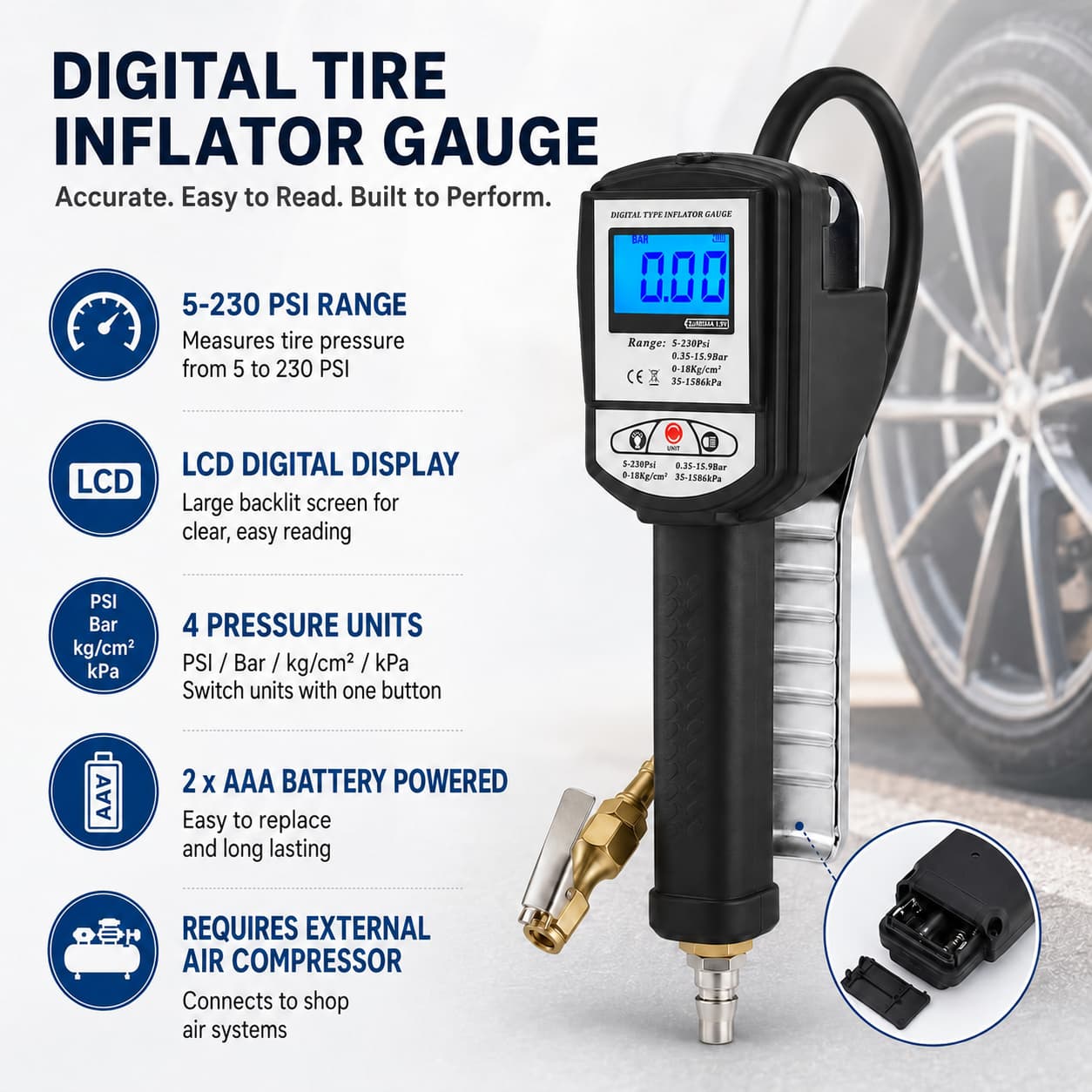
The Seapeng DP-002 is a compact digital tire inflator gauge designed for checking, inflating, and deflating tire pressure with a connected air source.
SEAPENG DP-002 Digital Tire Inflator Gauge, 5-230 PSI →SEAPENG TB-802 Handheld Digital Tire Inflator Gauge with LED Display
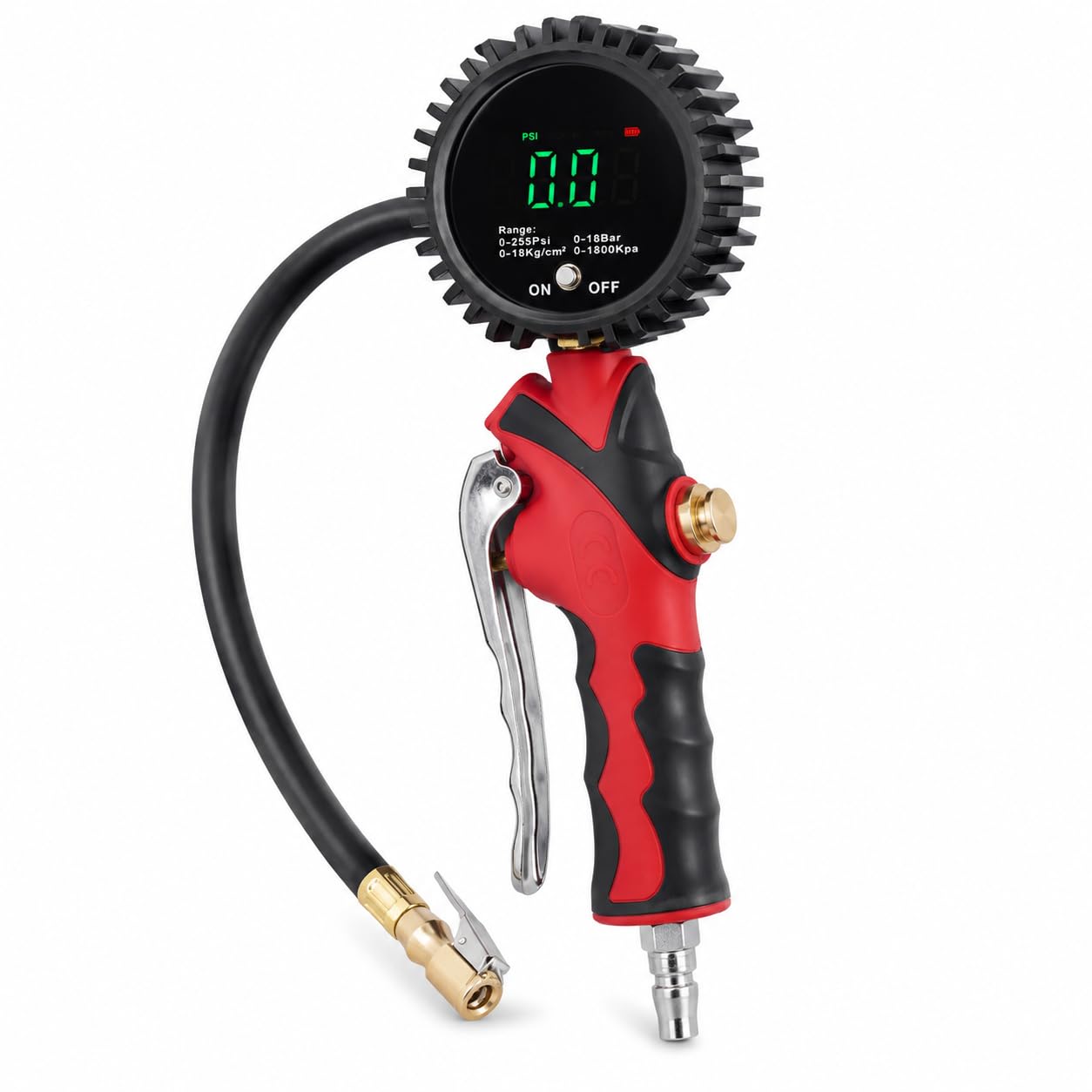
The Seapeng TB-802 is a handheld digital tire inflator gauge designed for checking, inflating, and deflating tire pressure with a connected air source.
SEAPENG TB-802 Handheld Digital Tire Inflator Gauge with LED Display →