
Tire Inflation Equipment Guide for Garage
Garage Equipment Guide
Tire Inflation Equipment Guide for Garage
A practical guide to choosing reliable inflation tools that help technicians work safely, accurately, and efficiently.
October 26, 2026
Efficient tire service depends on more than a powerful air compressor. A professional garage needs a complete inflation system that delivers steady airflow, accurate pressure readings, convenient hose access, and secure valve connections at every service bay.
Whether you operate an independent repair shop, tire store, dealership, fleet workshop, or vehicle inspection center, selecting the right garage tire inflation equipment can improve workflow and help technicians achieve more consistent results.
Why Professional Inflation Equipment Matters
Tire pressure affects vehicle handling, tread wear, energy consumption, and driving comfort. In a busy workshop, even small delays or inconsistent readings can be repeated across dozens of vehicles each day.
A properly planned inflation setup allows technicians to connect quickly, read pressure clearly, add or release air precisely, and move between service positions with less interruption. It also helps protect hoses, couplers, and gauges from unnecessary wear.
Essential Tire Inflation Equipment for a Garage
Air Compressor
The compressor is the foundation of the system. It should provide enough airflow and storage capacity for the number of bays and pneumatic tools operating at the same time.
Inflator Gauge
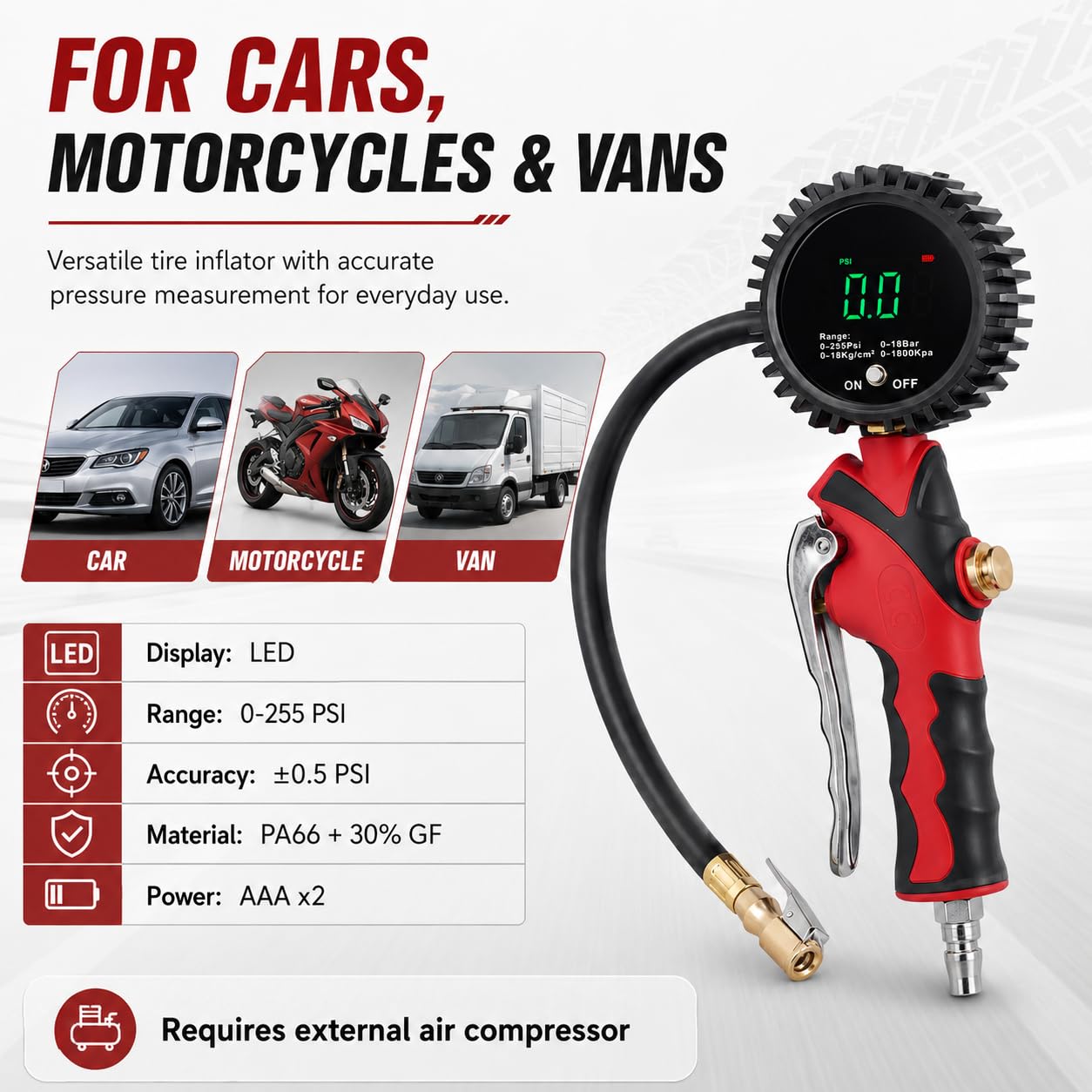
A professional inflator gauge combines pressure measurement, inflation, and deflation controls in one handheld tool for faster tire servicing.
Air Hose and Reel
A durable hose with a retractable reel keeps the work area organized while giving technicians enough reach around lifts and service bays.
Air Chuck
Clip-on, push-on, screw-on, and dual-head chucks provide different levels of convenience and access for passenger vehicles, trucks, and dual-wheel applications.
Quick Couplers
Compatible plugs and couplers make it easier to change tools while maintaining a dependable connection to the workshop air supply.
Pressure Regulator and Filter
Air preparation equipment helps control outlet pressure and reduce moisture or contaminants that may affect pneumatic tools and fittings.
Choosing the Right Inflator Gauge
The inflator gauge is the tool technicians interact with most often, so readability, control, and durability should be key purchasing considerations.
| Feature | Why It Matters | What to Check |
|---|---|---|
| Pressure range | Must cover the vehicles serviced in the workshop | Passenger car, light truck, or commercial requirements |
| Display type | Affects reading speed and visibility | Digital display or clear analog dial |
| Measurement units | Supports local and customer preferences | PSI, bar, kPa, or kg/cm2 |
| Hose length | Improves access around wheels and lifts | Reach, flexibility, and abrasion resistance |
| Chuck design | Determines connection speed and valve access | Clip-on, dual-head, or other compatible type |
| Calibration | Supports dependable pressure readings | Calibration procedure and service availability |
Digital vs. Analog Tire Inflators
Digital Inflator Gauges
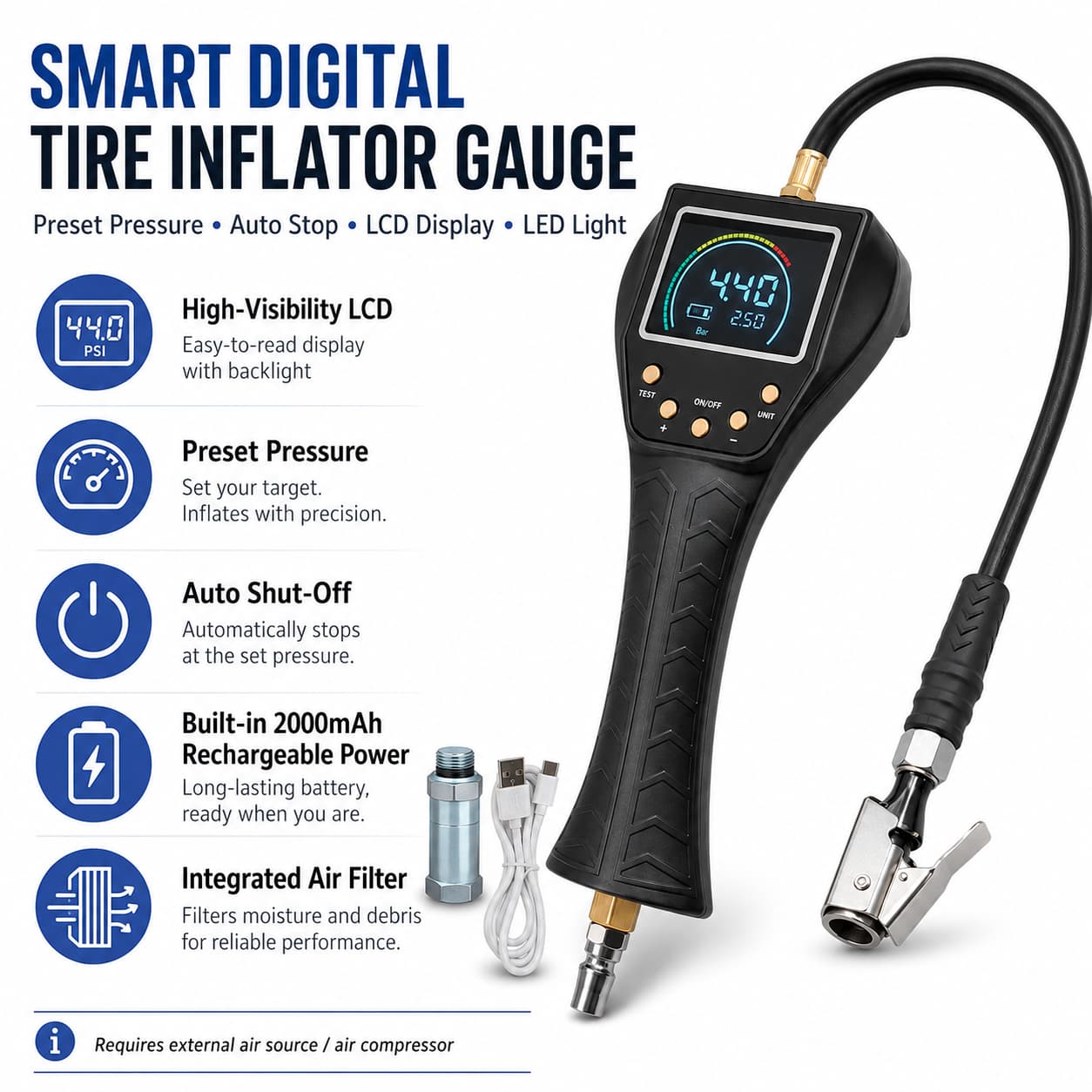
Digital models provide an easy-to-read numerical display and may support several measurement units. They are useful in workshops where technicians need fast readings or regularly switch between PSI, bar, and kPa.
Analog Inflator Gauges
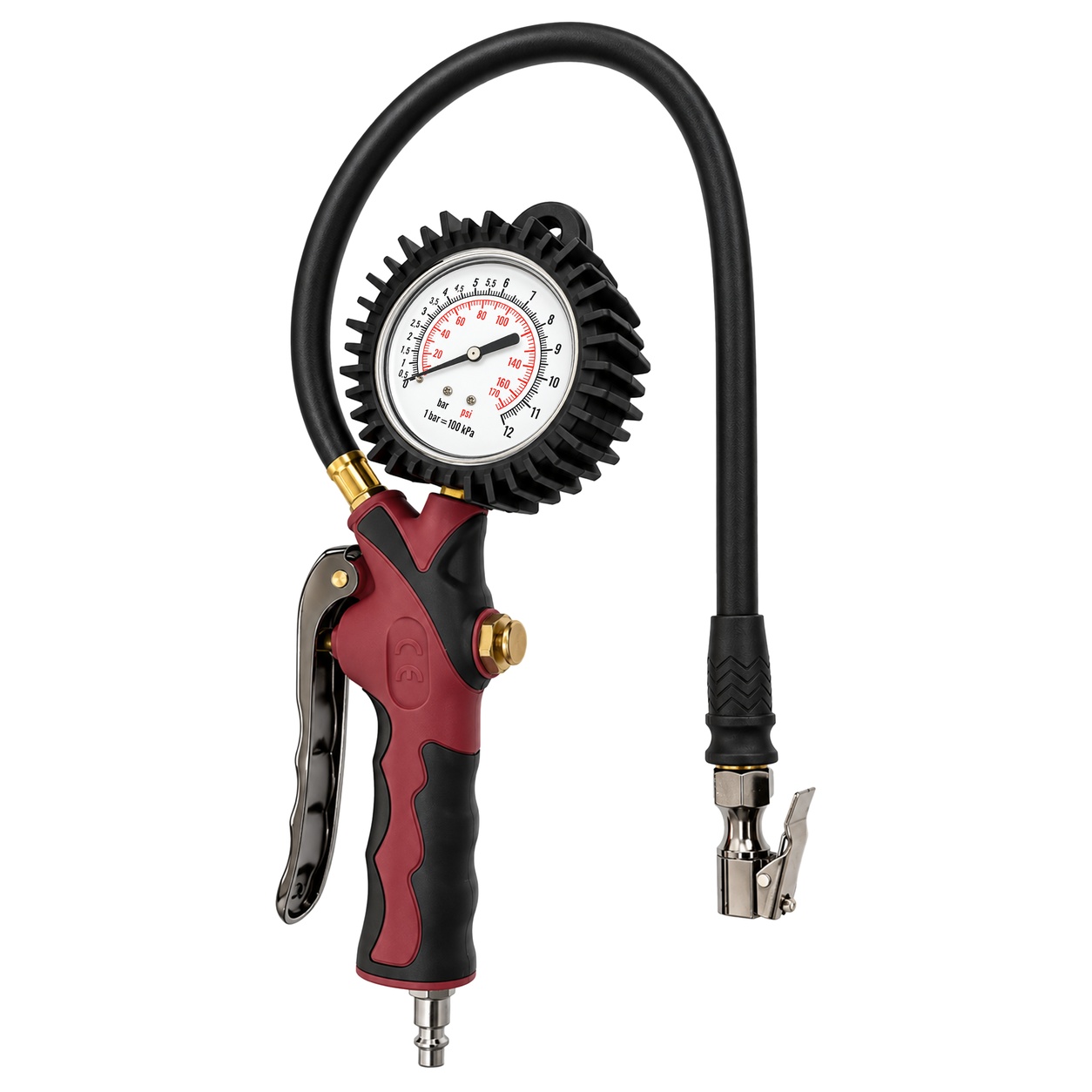
Analog gauges offer simple operation and do not normally require a display battery. A large, well-marked dial can be practical for general service work, especially when the gauge is protected by a durable rubber cover.
The best choice depends on workshop preferences, operating conditions, maintenance routines, and the types of vehicles being serviced.
Planning Air Hose Access in Service Bays
Even a high-quality inflator becomes inconvenient when the hose is too short, tangled, or positioned poorly. Hose reels should be installed where technicians can reach every tire without stretching the hose across sharp edges or busy walkways.
- Measure the distance from the air outlet to every wheel position in the bay.
- Select a hose length that provides sufficient reach without excessive slack.
- Position the reel overhead or on a suitable wall to keep the floor clear.
- Confirm that hose, coupler, and inflator connections use compatible sizes.
- Inspect the retraction system and hose condition as part of routine maintenance.
Equipment for Different Workshop Types
Passenger Car Repair Shops
A flexible hose reel, easy-to-read inflator gauge, and clip-on chuck can cover most routine tire pressure checks and adjustments.
Tire Stores and High-Volume Service Centers
High-use environments benefit from robust metal bodies, replaceable hoses and seals, protective gauge covers, and easily accessible calibration support.
Truck and Fleet Workshops
Commercial applications may require higher pressure ranges, extended or dual-head chucks, longer hoses, and equipment designed for large tire assemblies.
Mobile Service Vehicles
Compact compressors, portable inflators, organized hose storage, and secure equipment mounting help mobile technicians make effective use of limited space.
Maintenance Tips for Reliable Performance
- Inspect hoses regularly for cracks, abrasion, swelling, or air leakage.
- Check chucks, couplers, and threaded connections for secure sealing.
- Keep displays and gauge faces clean and easy to read.
- Follow the manufacturer’s calibration schedule for pressure gauges.
- Drain compressor tanks and service filters according to equipment instructions.
- Replace damaged seals and fittings before returning equipment to service.
Building a More Efficient Inflation Station
The most effective workshop setup is not necessarily the most complicated. It is a system in which the compressor, regulator, hose, couplers, inflator gauge, and air chuck work together reliably.
Before purchasing, consider daily service volume, vehicle types, required pressure range, bay layout, connection standards, and maintenance support. Choosing compatible equipment from the beginning can reduce interruptions and make future replacement or expansion easier.
Frequently Asked Questions
1. What tire inflation equipment does a basic service bay need?
A basic setup normally includes a suitable air compressor, regulator, air hose or hose reel, inflator gauge, compatible couplers, and an air chuck. The exact specification depends on the vehicles and tires serviced.
2. Is a digital inflator better than an analog inflator?
Neither type is automatically better for every workshop. Digital models offer clear numerical readings and multiple units, while analog models provide simple operation. Accuracy, durability, calibration, and technician preference are more important than display type alone.
3. Which air chuck is best for workshop use?
A clip-on chuck is convenient for routine passenger tire inflation, while a dual-head chuck is useful for trucks and dual-wheel vehicles. Choose according to valve access, required pressure, airflow design, and hose compatibility.
4. How often should a tire inflator gauge be calibrated?
Follow the gauge manufacturer’s recommended calibration interval and your workshop’s quality-control requirements. High-use tools or gauges exposed to impacts may need to be checked more frequently.
5. What should buyers check before ordering workshop inflation equipment?
Check pressure range, measurement units, hose and thread sizes, coupler standard, chuck type, maximum working pressure, material quality, replacement parts, calibration options, and compatibility with the existing air system.
Equip Your Garage for Better Tire Service
Explore dependable tire inflation tools designed for garages, repair shops, fleet workshops, and professional service bays.
Explore Tire Inflation EquipmentMore SEAPENG Tire Inflator Tools for Garage
SEAPENG DP-Q02 Professional Automatic Tire Inflator
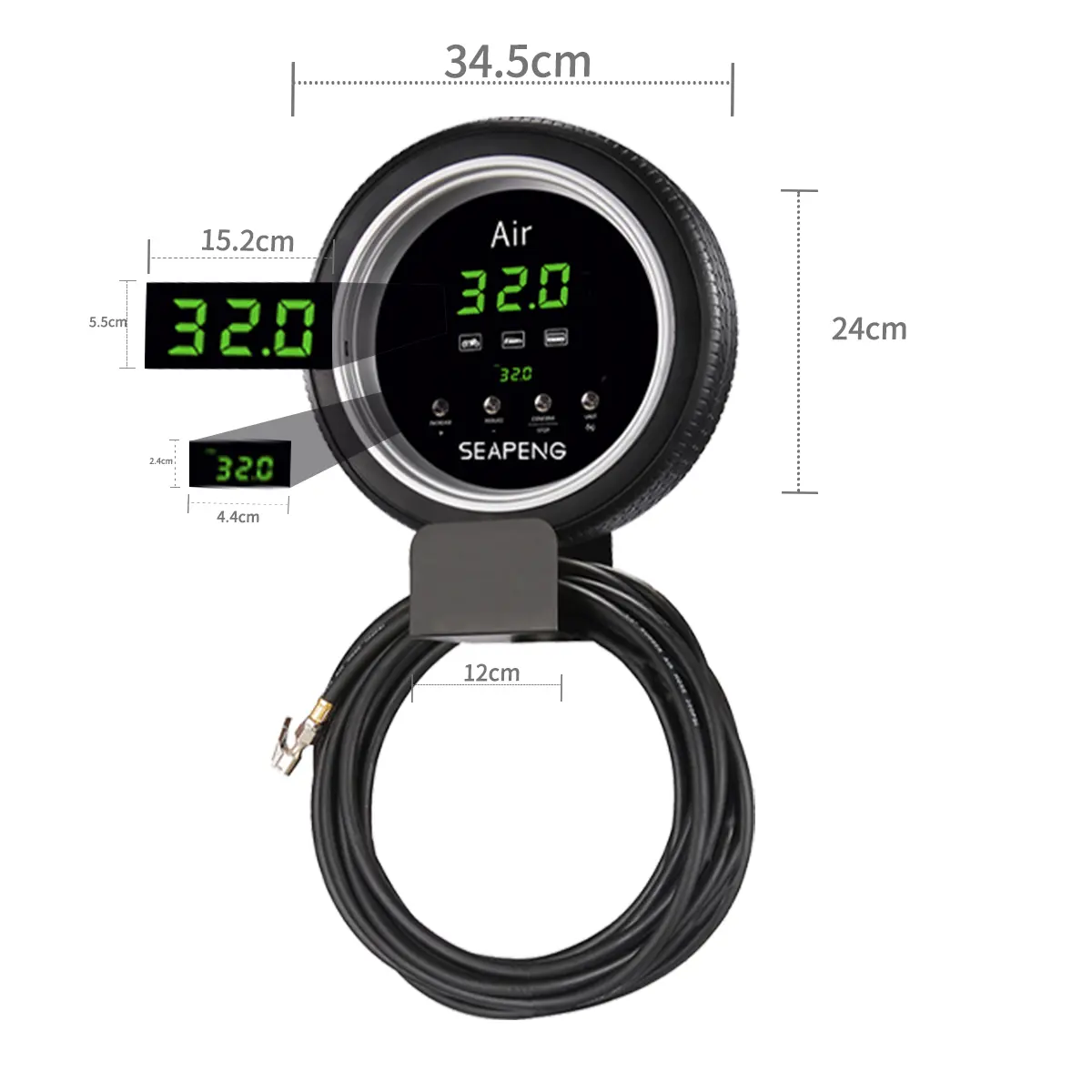
High-pressure automatic tire inflation for garages, service bays, RVs, off-road vehicles, and tire shops.
SEAPENG DP-Q02 Professional Automatic Tire Inflator →SEAPENG BW-L01 Digital Tire Pressure Inflator Gauge, 5-230 PSI
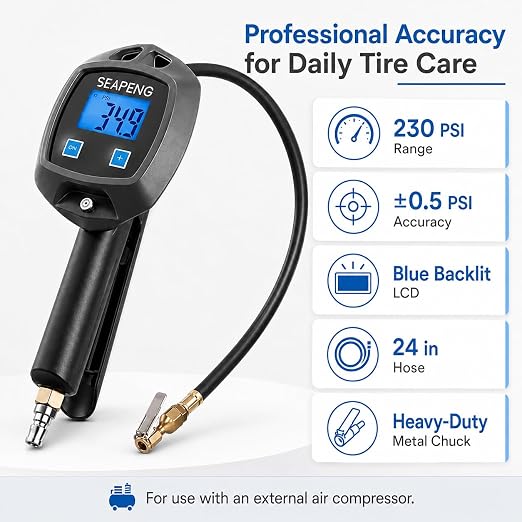
Check, inflate and fine-tune tire pressure with one tool. Connect the SEAPENG BW-L01 to your air compressor for quick inflation, clear digital readings and precise pressure control.
SEAPENG BW-L01 Digital Tire Pressure Inflator Gauge, 5-230 PSI →